Same athlete, next-level mechanics
S3 ATHLETIC PERFORMANCE · TRAINING LAB · AUGUST 11, 2026
Nothing about this athlete changed except the athlete. Same drive, same work ethic, same track. What changed is what happens in the first tenth of a second out of the start — and that's the part that actually shows up in the split times.
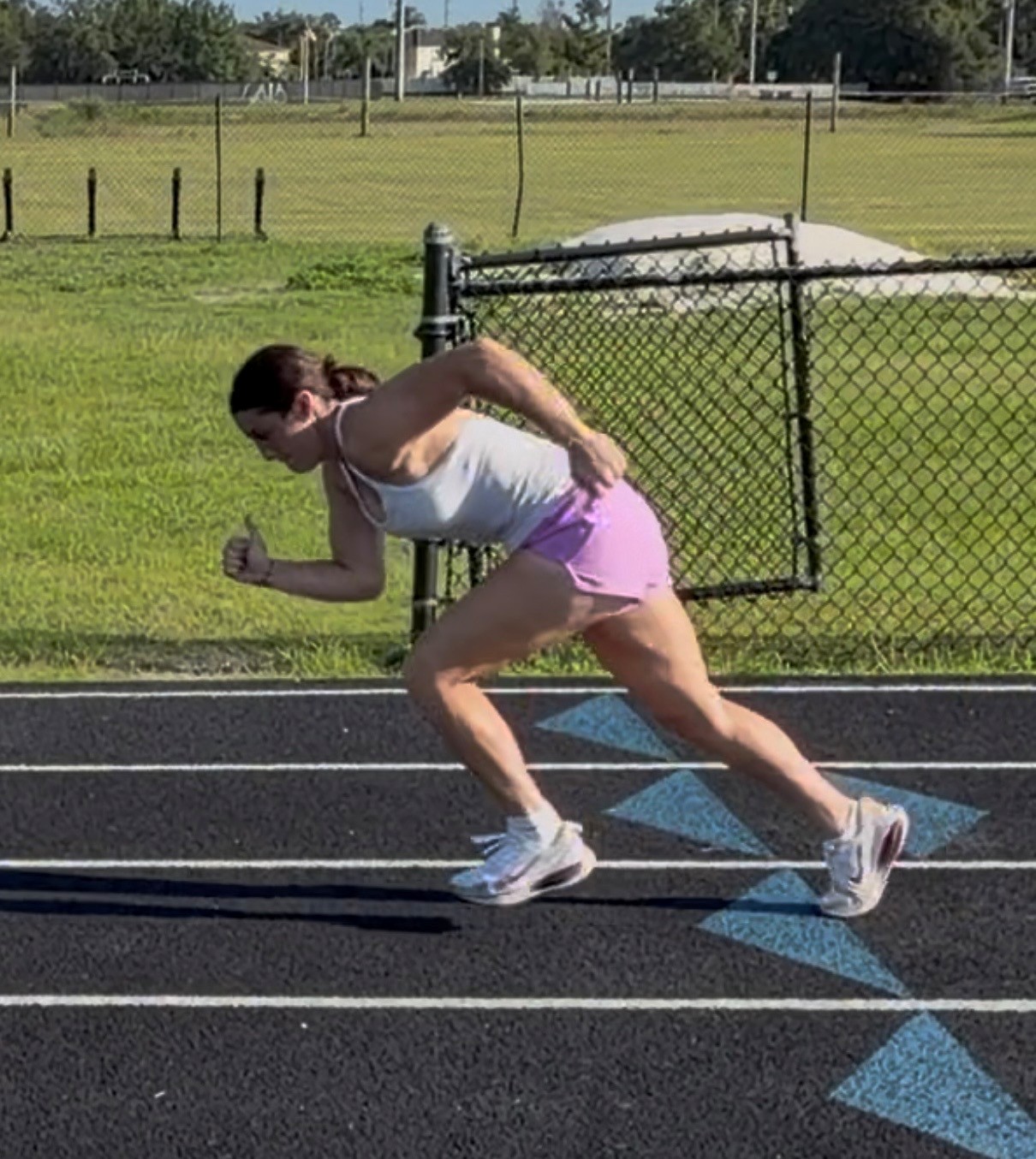
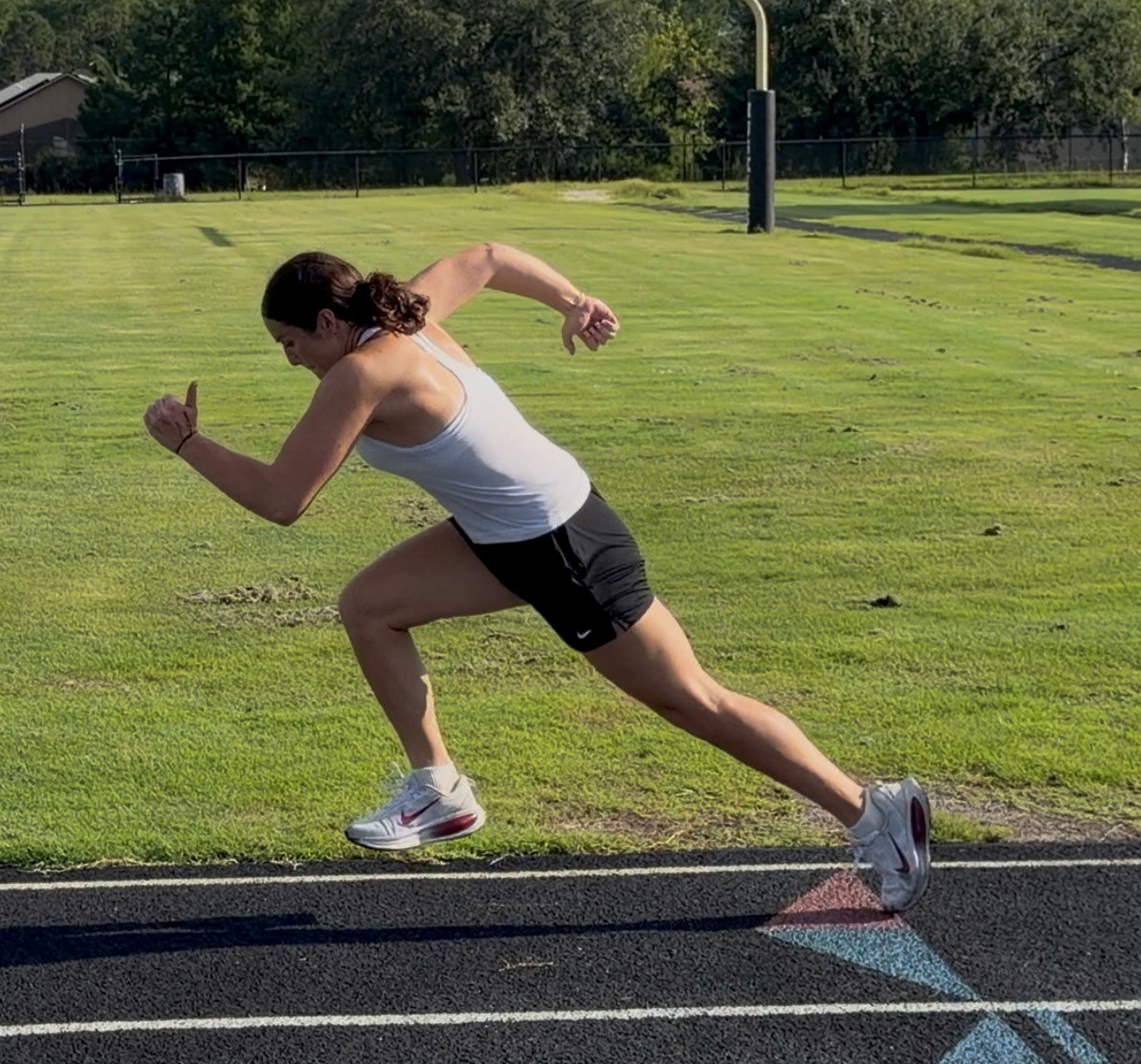
These two photos were taken months apart, same drill, same camera angle, captured mid-drive off the line. Side by side, they're a clinic in what training actually changes about a sprinter's mechanics.
What actually changed
Start position. In the before photo, the torso comes up out of the drive earlier, which shortens how long the athlete can apply force into the ground. In the after photo, the shin and torso angles hold longer — more intent, more drive, and more time spent producing horizontal force instead of vertical force.
Posture and angles. The after photo shows a flatter back and a straighter line from shoulder to trail foot. That's not a cosmetic difference — it's a more efficient angle for converting ground force into forward velocity, which is exactly what a 0–10 yard split measures.
Arm action. The after photo shows a tighter, more aggressive arm swing driving through a full range of motion. Arms set the tempo for the legs — a stronger, faster arm cycle pulls a faster leg cycle right along with it.
Leg drive. The rear leg in the after photo is fully extended and driving well behind the hip, instead of cutting the extension short. That's more force applied over more time — the raw ingredients of acceleration.
None of this came from a single big fix. It's the accumulation of repeated, timed acceleration work — the same 0–10 yard mechanics we break down in Why the first 10 yards decide the whole race — logged session over session against this athlete's own baseline, not a generic standard.
This is what "real progress" looks like at S3: not a highlight-reel moment, but the same drill run enough times, with enough precision, that the mechanics themselves change. The dashboard is what proves it happened — the photos are just what it looks like.
Ready to see your athlete's own before-and-after?
Contact us to learn more or get your athlete started with training.