We don’t guess at technique. Sprint mechanics are captured on the track and reviewed with pose analysis so athletes can see stride length, ground contact, and posture frame by frame.
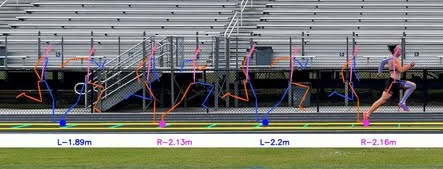
Pose overlay with measured stride lengths (L / R) — the same data language we use to coach acceleration and max velocity.
Force production drives speed
Speed is a byproduct of force — how much force an athlete can produce, and how quickly they can produce it. Our strength and power work is built around loaded movement progressions and jump testing, tied directly to on-field output rather than just moving heavier weight.
Every session cycles through the same three core pillars — Speed, Strength, and Power — with intensity and complexity adjusted so athletes are always progressing toward their goals.
Every rep, measured
We track each athlete's individual sprint efforts in real-time — split times, total times, and speed in mph for every run. Objective data lets both athlete and coach see performance trends, identify areas for improvement, and tailor each session to the athlete's unique needs.
Recovery & mobility built in
Every warm-up includes a full joint mobilization sequence — starting with the hips, moving through the thoracic spine — to unwind athletes' bound-up bodies before they train.
Training Plan Overview
The full breakdown of our periodized approach, training themes, and how we use dashboard data to track progress.
Download PDFMeet the Staff
Get to know the coaches guiding S3 athletes — from founder Missy Farwig to our speed and youth development coaches.
Meet the Team →Sample Meal Plan
A sample 2,700-calorie meal plan for athletes looking to support their training with proper fueling.
Download PDFReady to see the numbers for yourself?
Book a baseline testing session — 0–30 yd acceleration, fly-30, and broad jump.
Get the PDF
Enter your email and we’ll send the download link instantly.
No spam. Just the resource + occasional training insights.