⟦ The S3 System ⟧

Speed, strength & science — structured.

Training frequency, periodized blocks, and clear themes so every session has a purpose. Progress is measured with timing gates and jump testing, not how a workout “felt.”

training frequency

Training frequency is a primary driver of development. Once a week is excellent for maintaining current ability and avoiding regression. Twice a week supports focused progress in strength, speed, and technique. Three to four times a week gives committed athletes the strongest opportunity to maximize gains and reach peak conditioning.

Frequency Best for Outcome focus
1× / week Maintenance & consistency Stay sharp, limit regression
2× / week Steady improvement Build strength, speed, technique
3–4× / week Peak development Maximize gains & readiness
key phases of each block

Programs use carefully structured progressions and regressions tailored to training age and skill level. Work is organized into multi-week blocks that maximize performance gains while managing injury risk.

Phase 1

Accumulation

Athletes build a solid foundation of strength, endurance, and technique — developing the physical capacities needed for higher-intensity work.

Phase 2

Realization

Focus shifts toward refining and improving performance in specific athletic movements and skills, transitioning athletes closer to peak performance.

Phase 3

Peaking

Athletes fine-tune their abilities and achieve optimal performance levels, readying themselves for competition or testing.

speed

Four training themes, every cycle

Acceleration — explosive power and quickness in short bursts, focusing on the start and first few steps.

Maximum Velocity — top-end speed and efficiency at full sprint.

Change of Direction — agility and the ability to quickly and efficiently redirect movement.

Speed Endurance — maintaining speed over longer periods or repeated efforts.

mechanics in motion

We don’t guess at technique. Sprint mechanics are captured on the track and reviewed with pose analysis so athletes can see stride length, ground contact, and posture frame by frame.
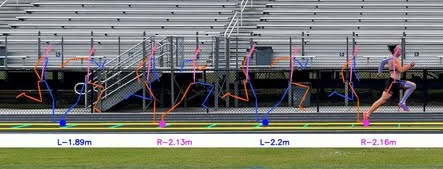
Motion analysis of a sprinter showing left and right stride lengths across a sequence of poses

Pose overlay with measured stride lengths (L / R) — the same data language we use to coach acceleration and max velocity.

strength & power

Force production drives speed

Speed is a byproduct of force — how much force an athlete can produce, and how quickly they can produce it. Our strength and power work is built around loaded movement progressions and jump testing, tied directly to on-field output rather than just moving heavier weight.

Every session cycles through the same three core pillars — Speed, Strength, and Power — with intensity and complexity adjusted so athletes are always progressing toward their goals.

science

Every rep, measured

We track each athlete's individual sprint efforts in real-time — split times, total times, and speed in mph for every run. Objective data lets both athlete and coach see performance trends, identify areas for improvement, and tailor each session to the athlete's unique needs.

Recovery & mobility built in

Every warm-up includes a full joint mobilization sequence — starting with the hips, moving through the thoracic spine — to unwind athletes' bound-up bodies before they train.

Free resources — no guesswork, just the same frameworks we use with athletes.

Training Plan Overview

The full breakdown of our periodized approach, training themes, and how we use dashboard data to track progress.

Download PDF

Meet the Staff

Get to know the coaches guiding S3 athletes — from founder Missy Farwig to our speed and youth development coaches.

Meet the Team →

Sample Meal Plan

A sample 2,700-calorie meal plan for athletes looking to support their training with proper fueling.

Download PDF
⟦ Get Started ⟧

Ready to see the numbers for yourself?

Book a baseline testing session — 0–30 yd acceleration, fly-30, and broad jump.

Get Baseline Testing Details